


View By Date
- April 2026 3
- March 2026 2
- February 2026 2
- January 2026 1
- December 2025 1
- November 2025 2
- October 2025 3
- September 2025 2
- August 2025 2
- July 2025 2
- June 2025 2
- May 2025 3
- April 2025 2
- March 2025 3
- February 2025 1
- January 2025 1
- November 2024 1
- September 2024 1
- July 2024 1
- May 2024 3
- April 2024 1
- March 2024 1
- February 2024 2
- January 2024 2
- August 2023 1
- July 2023 1
- June 2023 2
- May 2023 3
- April 2023 4
- January 2023 2
- November 2022 1
- September 2022 3
- June 2022 1
- December 2021 1
- November 2021 4
- October 2021 2
- September 2021 1
- January 2021 1
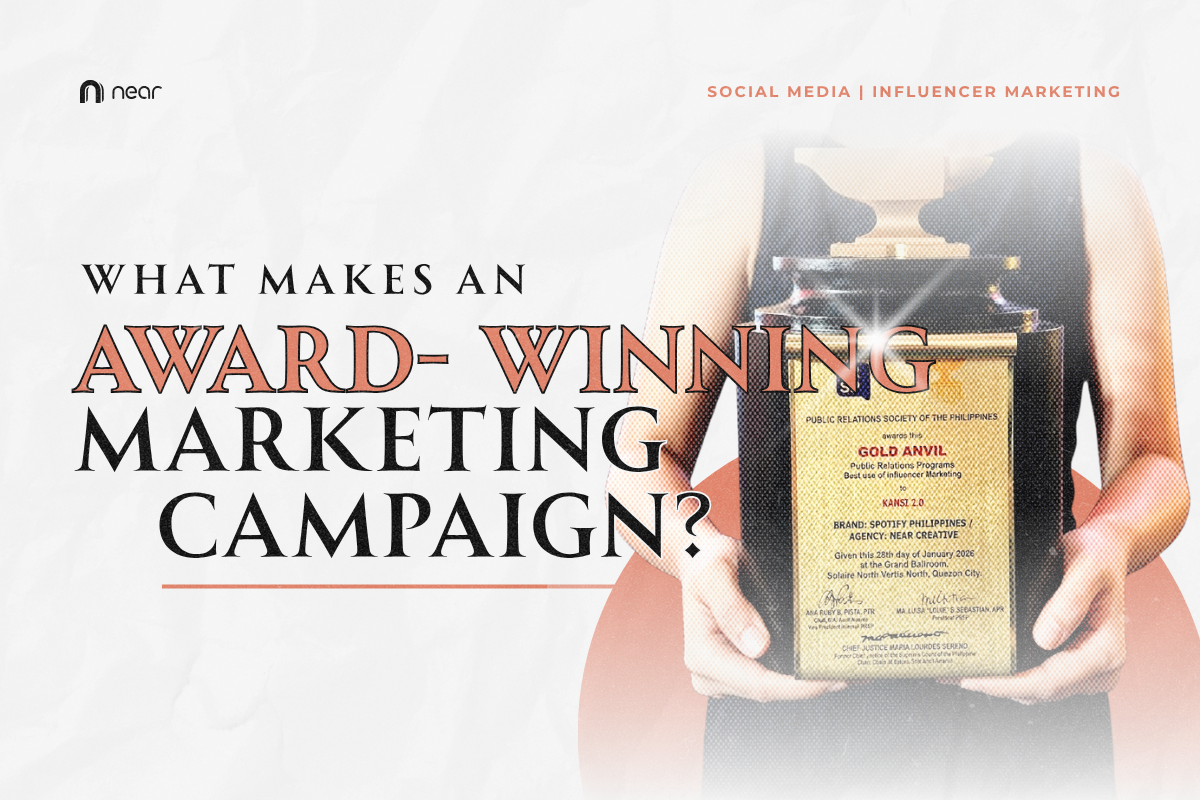
What Makes an Award-Winning Marketing Campaign?
What Makes an Award-Winning Marketing Campaign?
Awards are nice. But they’re not the point.
The best campaigns win because they do something harder than look polished: they make people think, feel, and act differently. This idea sits at the heart of Near Creative, which pushes teams to stop asking, “What should we post?” and start asking, “What must change because this exists?”
That shift matters. As both the Cannes Lions judging criteria and Effie’s effectiveness philosophy suggest, award-winning work is not just about aesthetics or novelty. It’s about creative ideas that are strategically sharp, behavior-changing, and commercially meaningful.
In other words: strong campaigns don’t just get noticed. They move people.
1. Start with the real problem, not the obvious one
Most campaigns start too high up the funnel. They focus on symptoms like “low engagement” or “declining sales” instead of asking what’s really getting in the way. It defines the problem as the real human friction in behavior, culture, or systems that’s holding people back.
That means looking beyond dashboards and digging into lived behavior: what workarounds people invent, where they hesitate, what rituals they repeat, and how they describe their own frustrations. The strongest campaigns don’t begin with “how do we get attention?”
They begin with “what truth is the category still ignoring?”
That’s also what many campaign analysts point to when breaking down work that truly sticks. In a roundup of viral campaigns, the most effective campaigns are rooted in emotional relevance, user participation, and clarity. They connect the dots between a brand and a behavior people can actually see themselves in.
2. Turn insight into a behavior-changing idea
If an idea doesn’t change behavior, it’s not a big idea. It’s just decoration that adds to the noise.
That’s a useful filter because a lot of campaigns sound big in a deck, but they don’t actually do anything in the real world. The best ones turn insight into a behavior-changing proposition: a new lens, a new action, or a new role for the brand in people’s lives.
This is where Near’s work on Spotify Wrapped 2024 is a strong example. Wrapped was already a global phenomenon, so the challenge wasn’t awareness — it was freshness. Near responded by making storytelling the center of the KOL strategy and letting creators share Wrapped as a personal, cultural moment instead of a templated promo. That helped the campaign land 13.5x above target for impressions, 2.56x above target for reach, 1.26x above target for views, and outperform Spotify Philippines’ other major 2024 KOL campaigns by 52%.
That’s also why the campaign stood out beyond performance. As Campaign Del Mar’s analysis of Spotify Wrapped explains, Wrapped works because it transforms data into identity. It doesn’t just show users what they listened to. It reflects their year back to them in a way that feels personal, celebratory, and highly shareable. That’s what a behavior-changing idea does: it turns passive consumption into participation.
3. Make the case with craft, clarity, and proof
Award-winning campaigns highlight two things that make work defensible: persuasive craft and numbers with narrative. That means thinking about pacing, typography, sound design, and visual storytelling but also making sure your results are framed as impact, not just raw stats. The strongest case structures are simple: problem, insight, big idea, system, results.
This is also where many brands fall short. As Filestage’s breakdown of viral campaigns points out, the campaigns people remember usually pair a strong idea with strong execution: a memorable slogan, a funny or emotional trigger, a timely launch, or a clear participation mechanic. But just as important is the planning behind it. A well-organized campaign has a reason for every creative choice and that’s what makes it easier to defend when the spotlight is on.
Brands must also be cautious against the things that weaken otherwise strong work: overclaiming, fake scale, feature dumping, and brand worship. Those mistakes make campaigns feel vague, bloated, or self-congratulatory. We also have what we call “jury brain” where fatigue, novelty bias, time pressure, and the question every juror is silently asking, “Is this worth defending in a room?”
That is why clarity becomes even more important.
4. Build work people care about participating in
The final difference between good work and award-winning work? Participation.
Build ideas people care about participating in, not just consuming. That’s where the strongest campaigns win: they create rituals, stories, or moments people want to adopt, remix, or pass on.
Campaigns that spread fastest are the ones that make people feel seen and give them a simple way to join in. Participation is what turns content into a cultural moment. That’s also why storytelling matters so much. Storytelling feels simple because it works, it cuts across culture, age, and geography.
In a feed full of noise, the campaigns that break through are the ones that feel less like ads and more like something worth sharing.
Key Takeaways
Define the real problem before you chase the big idea. Don’t stop at “we need buzz” or “we need awareness.” Ask what friction, tension, or behavior is actually blocking change.
Pressure-test your idea by asking what people will do differently because of it. If the answer is unclear, the idea probably isn’t strong enough yet.
Package your results like a story. Strong work deserves strong proof, but that proof becomes far more persuasive when it’s framed both around metrics and movement.
If you want to create campaigns that don’t just look good but actually matter, start there. Because what makes an award-winning campaign isn’t just originality. It’s clarity, behavior change, and the ability to prove that something real moved.
LinkedIn Influencers: Why B2B Brands Are Now Paying Attention
LinkedIn Influencers: Why B2B Brands Are Now Paying Attention
For a long time, influencer marketing sounded like a B2C thing: beauty, fashion, food, travel. But in 2026, B2B influencer marketing on LinkedIn is having its debut. And for B2B brands, this shift isn’t about trend-chasing, but about influencing trust earlier in the buying journey.
Buyers are now scrolling feeds, saving creator posts, and sharing carousels in internal group chats. In fact, 94% of marketers say creator content performs as well as or better than traditional ads, especially on engagement rates, saves, and time spent which builds audience trust. And in B2B specifically, most buyers now see influencer content as more credible than brand-led messaging.
At Near, we are building on this shift. In our guide on how to leverage Instagram, TikTok, YouTube, and LinkedIn for influencer campaigns, we already flagged LinkedIn as the platform where thought leadership and creator content collide.
So, why are B2B brands suddenly paying attention to LinkedIn influencers? And how can you use them strategically (not just because “everyone else is doing it”)?
Let’s break it down into three big shifts.
1. B2B buyers reduce risk: trusting people more than “the brand”
Traditional B2B marketing assumed buyers were purely rational: show them the features, the ROI calculator, maybe a case study, and they’ll convert. Reality check: modern B2B buyers, especially Millennials and Gen Z, still buy with their gut first and justify with logic later.
That’s where LinkedIn creators come in.
Creators feel human and not corporate. LinkedIn’s own research shows that B2B creator content injects personality, emotion, and relatability into categories that have “historically been very stale or boring.”
Trust travels faster through individuals. When a RevOps lead, CTO, or marketing strategist shares a POV, it reads as experience and feels like a safer bet.
Influencers translate complexity. B2B influencer marketing works because creators simplify complex offers in a way audiences already understand and trust.
In other words: people buy from people.
What this looks like in practice:
Partner with subject-matter experts (SMEs), not just “famous” creators. Think: a cybersecurity CISO, a fractional CMO, an HR tech founder.
Let them share real takes: what’s broken, what needs to change, what your category gets wrong.
Co-create content that feels like a conversation: hot takes, commentaries, frameworks, carousels, webinars.
The more your brand shows up through humans, the less it feels like a logo shouting into the void.
2. LinkedIn offers niche reach in a high-intent environment built for business decisions
Unlike TikTok or Instagram, where audiences are in entertainment mode, people open LinkedIn to learn, network, and make career or business decisions. That context alone changes how powerful creator content can be.
Several things work in your favor here:
Niche > huge. B2B influencers on LinkedIn often have smaller followings, but those followers are CMOs, founders, engineers, or procurement leads in very specific industries. That’s better.
Audience intent is higher. LinkedIn users are already in a “work brain” mindset, making them more receptive to frameworks, case studies, and expert breakdowns, not merely for entertainment.
Ad tools amplify creator voices. LinkedIn’s Thought Leader Ads let brands promote posts from executives or creators directly into target feeds, generating up to 252% higher click-through rates and 62% lower cost-per-click compared to standard single-image ads. This is where creator content starts outperforming traditional brand ads not just on engagement, but on pure efficiency of spend.
This is where creator marketing starts to look less like “brand awareness” and more like pipeline influence.
When your ideal buyer sees the same creator:
explaining a problem on their feed,
sharing a mini-case study from your product, and
appearing in a webinar or event you’re hosting…
…you move from an unknown vendor to a known, trusted option
3. From one-off posts to always-on thought leadership
The biggest shift on LinkedIn? Brands are moving from one-shot campaigns to always-on creator ecosystems.
There are two big pieces to this:
a) Long-term creator partners
Modern B2B brands are treating creators more like recurring columnists than one-off ad slots:
collaborating on series (e.g., “5 days of Marketing myths”, “Weekly GTM breakdown”),
co-hosting webinars and live events,
and repurposing content across email, blogs, and sales enablement.
This mirrors what we advocate in our piece on effective influencer briefs: clear objectives, non-negotiable messages, and then enough creative freedom for the creator to speak in their voice.
The result? Content that compounds over time instead of spiking once and disappearing.
b) Employee and executive creators
Your employees are often your most underrated LinkedIn influencers. Employee networks can be many times larger than a company’s follower count—and far more trusted.
Some of the strongest B2B “influencers” today are:
founders and CEOs sharing honest learnings
product leaders breaking down launches
sales and CS teams talking about real customer problems
That mix is what keeps your brand from feeling like either a faceless corporation or a rented voice.
Key Takeaways: How to Start Using LinkedIn Influencers
Here are three actionable ways to turn this into a real LinkedIn influencer strategy:
Start with your ICP, then the algorithm.Define who you want to influence (roles, industries, deal size), then find creators and employees who already speak to those people. Follower count matters less than audience fit.
Design collaborations that teach.Focus LinkedIn creator content on frameworks, breakdowns, and POVs that genuinely help your buyer do their job better. Product mentions should feel like solutions and not interruptions to your audience.
Invest in relationships. Not one-off posts.Move toward multi-month or multi-quarter collabs with a few key creators + internal leaders. Track saves, replies, lead quality, and influenced pipeline.
If you want your B2B marketing to feel more like real conversations and less like banner ads, LinkedIn creators are now in. Download Near’s Trends Guide to see what’s shaping creator-led marketing and how to turn LinkedIn influencers into a strategic growth channel, now that they’re becoming a core part of modern B2B growth.
Category: Social Media
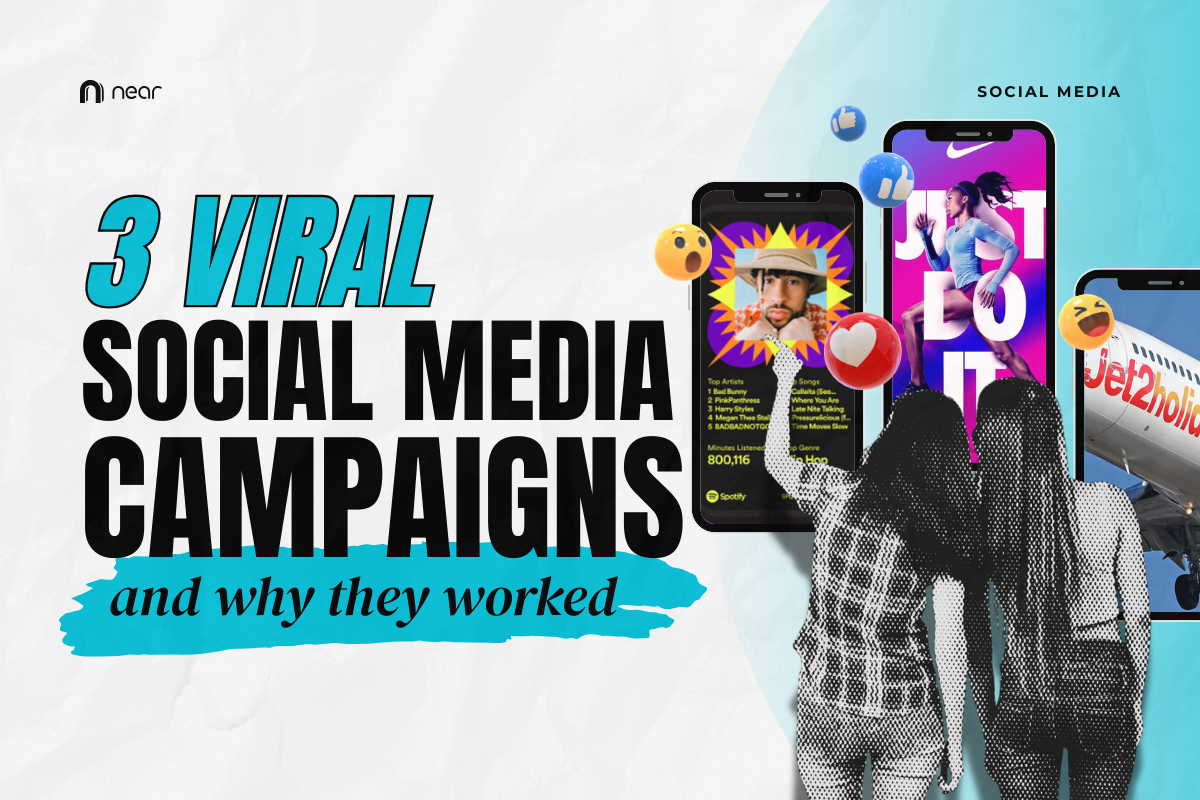
3 Viral Social Media Campaigns And Why They Worked
3 Viral Social Media Campaigns And Why They Worked
Every marketer wants their social media campaigns to “go viral”, but being viral isn’t just entirely by pure luck. The most effective viral social media campaigns are built on clear strategy: emotional storytelling, smart use of data, user-generated content (UGC), and platform-native creative that people want to share.
At Near, we see this every day in the way standout campaigns blend storytelling with structure whether it’s our work on campaigns, or our guide on trend-jacking that actually fits your brand.
Below, we break down three viral campaigns and unpack why they worked, plus what you can steal for your own campaigns.
1. Spotify Wrapped
Every December, Spotify Wrapped turns listening data into a personal story: your top artists, songs, and genres, wrapped in bold visuals and built for sharing on Instagram Stories, X, and TikTok.
Marketing breakdown from industry analyses shows why it’s genius:
It uses data to make each user feel seen, not surveilled.
It’s visually built for mobile, with snackable slides optimized for screenshots and shares.
It invites reflection (“this was my year in music form”), which deepens emotional attachment to the platform.
In our Spotify Wrapped 2024 campaign with Near, we leaned into that same principle-making Wrapped feel personal and proudly shareable by working with creators whose content styles mirrored how people naturally talk about their listening habits online.
Why it worked (and what you can copy):Spotify Wrapped shows that data can be delightful when you turn it into a story. Instead of keeping insights in dashboards, they turned them into social currency. For your brand, that might look like: milestone roundups, “year in review” moments, or progress snapshots that help users say, “This is me” and share it.
2. Nike’s “Just Do It”
A slogan that became a movement. Launched in 1988, Nike’s “Just Do It” is one of the most enduring campaign platforms in marketing history. The line is short, forceful, and open-ended enough that anyone—from elite athletes to first-time runners—can project their own story into it.
Case studies highlight a few core reasons it worked so well over decades:
The slogan is universal but deeply personal; it speaks to fear, self-doubt, and action in three words.
Nike consistently pairs it with emotionally charged storytelling like “Dream Crazy” and “Dream Crazier,” which spotlight underrepresented athletes and social issues instead of just products.
Across TV, social, and digital, the creative centers on human struggle and ambition, with the swoosh and product acting as supporting characters, not the main story.
Why it worked (and what you can copy):Nike proves that a clear brand POV + consistent storytelling can outlast any trend. On social, that means your campaign shouldn’t just chase memes; it should reinforce a core belief over and over. When your audience can summarize your brand in one line and it feels emotionally true, you’ve built a narrative people want to join.
3. Jet2’s “Nothing Beats a Jet2 Holiday”
In a travel space flooded with glossy drone shots and picture-perfect beaches, Jet2’s “Nothing Beats a Jet2 Holiday” hit differently. Instead of hyper-polished fantasy, the campaign leaned into real holiday footage: families, couples, and friends laughing, dancing, splashing in pools, and enjoying ordinary-but-special moments.
On TikTok, the catchy “Nothing Beats a Jet2 Holiday” audio became a trend in itself, with users stitching their own clips to the sound, effectively turning everyday travelers into co-creators of the campaign. Coverage notes how Jet2 capitalized on this quickly, embracing the meme energy instead of fighting it, and amplifying UGC rather than just pushing polished ads.
Why it worked (and what you can copy):Jet2 focused on feeling, not fantasy. The campaign reminds us that the most powerful travel ads are about the people you’re with. If you center real humans, real reactions, and real use cases (especially in short-form video), your campaign becomes more relatable and shareable by default.
What These Campaigns Have in Common
Different industries, different formats, but Spotify, Nike, and Jet2 share a few core playbook moves that any brand can adapt:
They start with a human truth, not a product brief.Spotify taps into identity and nostalgia. Nike taps into doubt and courage. Jet2 taps into the joy of shared experiences. The product is present, but the feeling leads.
They design for participation.Wrapped is built for screenshots and shares. “Just Do It” invites every person to write their own chapter under the same banner. Jet2’s TikToks became a template users could easily copy.
They stay consistent across platforms while playing native.Each campaign translates across channels without losing its core idea. The message stays the same, but the execution matches each platform’s behavior and culture.
Key Takeaways: How to Apply This to Your Next Campaign
If you’re planning your next big social push, here are three actionable ways to borrow from these wins:
Turn insights into stories.Don’t let your data sit in a report. Turn it into personalized visuals, “year in review” moments, or community milestones your audience will be proud to share.
Lead with a clear, repeatable idea.Before you design a single asset, ask: Can this campaign be summed up in one line like “Just Do It” or “Nothing Beats a Jet2 Holiday”? If not, simplify until it can.
Design for co-creation.Build campaigns that welcome UGC, duets, stitches, or reaction content. The most powerful campaigns are the ones your audience helps finish, not just consume.
Want to create social media campaigns that are viral and valuable? Download Near’s Trends Guide to spot what’s shaping creator-led marketing in 2025 and turn those insights into campaigns people remember, not just scroll past.
3 Steps to Effective Influencer Briefs Without Losing Creativity
3 Steps to Effective Influencer Briefs Without Losing Creativity
Your brand has 15 pages of guidelines. Your influencer has 15 seconds to sound authentic. The friction between brand control and creator voice is the central tension of every campaign, and it's why your influencer brief isn't just a document, but the blueprint that either grants creative freedom or guarantees a flop. You’re not just writing instructions, you’re also shaping how your brand shows up through another person’s voice. Yet, this crucial document is often treated like a rigid ad script, forgetting the core of creator-led content: authenticity.
Whether you're building a TikTok-first campaign or working with mid-tier Instagram creators, one thing is clear: authenticity drives results. And that starts with a smarter brief.
Let’s break down the three essential steps to writing an influencer brief that aligns with your brand and plays to a creator’s strengths backed by best practices from the creator economy.
Step 1: Build the foundation and not just the script.
A common pitfall? Over-writing the brief like it’s a TVC. Brands often go overboard with talking points, restrictive do’s and don’ts, and content that reads like a product manual.
Imagine a brief that specifies: "In the 1st second, hold the packaging with your thumb on the logo. From 3-5 seconds, state key benefit 1 ('₱100 OFF on your first order') while pointing at the screen. End the video with a mandated, unskippable call-to-action to click the bio link now, using only our specific link text." Nope, we don’t like that.
Here’s what not to do:
Force influencers to follow a rigid script
Prioritize features over stories
Ignore the creator’s tone and audience
Over-police visuals, captions, and hooks
Instead, approach the brief like a collaborative blueprint. Provide them with clarity and not with control.
The Essential Brief Foundation Checklist
Instead of over-scripting, focus on providing a clear brand foundation using these five essential elements:
Brand & campaign overview: What’s the product, purpose, and positioning?
Audience fit: Who are you speaking to and why is this creator a match?
Key message pillars: Not full lines, rather just the must-mentions and value props
Visual direction & sample content: Give examples that match your tone, without boxing them in
Deliverables & deadlines: Be specific about formats, platforms, and timelines
Your brief must act as the strategic document that channels creative talent toward measurable goals, because, “Creativity without strategy might impress, but it won’t convert. Start with insight, not instinct.” - inBeat
Step 2: Leave room for platform-native creativity
Once your strategic foundation is rock solid, the next step is ensuring that your message translates authentically to the creator’s native environment. Your creators know their platform better than you do, so let them lead the way. Great content is built for the platform it lives on. TikTok needs fast hooks and trending audios. YouTube Shorts might need stronger storytelling flow. Instagram Reels rely on visuals and transitions. And influencers? They’ve already cracked that code.
How to empower influencers through your brief:
Set guidelines, not guardrails: Give product details, but let them shape the narrative
Match content types to creator strengths: Is it unboxing, POV, testimonial, or transformation?
Encourage organic mentions: Ditch the “say this line exactly” rule\
Trust their format instincts: Let them use trending audios, native hooks, and caption styles
Being intentional means your brief can't be a one-size-fits-all document. It requires you to do your homework and tailor key elements of the request to each individual creator. Take it from Bobabam’s Molly Savage via Superfiliate:
“Be intentional. Personalize the brief for each creator and match the format to what actually performs on their page.”
For example, in our KOL campaign with InLife, creators weren’t handed uniform scripts, they crafted TikToks around their own budgeting hacks and financial experiences. The result? Relatable, real content that made financial literacy feel fresh and not forced.
And remember: brief differently depending on the content’s use. Organic collab? Keep it light. Planning to boost or run it as paid ads? This shifts the entire legal and strategic scope, requiring clarity on two crucial components: Usage Rights (legal permission to use the content in your marketing channels) and Creator Whitelisting (giving the brand permission to run the ad directly from the creator's handle to leverage their social proof and audience targeting).
Step 3: Align expectations, but keep it humanized.
Lastly, the best briefs strike a balance: clear expectations and enough space for the creator to surprise you. Include the practical bits:
Deliverables (Reels, TikToks, Stories, etc.)
Posting dates & timelines
Caption/hashtag requirements
Key do’s & don’ts (e.g., avoid profanity, no direct competitor tags)
But also include:
Brand tone: Is your brand cheeky, empowering, expert, or minimalist?
Campaign goals: Are we going for reach, clicks, or community building?
Compensation terms: Include if it’s paid, gifted, commission-based, or long-term
Always remember to encourage feedback, because briefs that invite collaboration build long-term trust both with brands and creators, and eventually… better results.
In our Spotify Daylist campaign, creators were simply prompted to interpret their mood-based playlists. No hard scripts. Just real talk and a meaningful relationship. That flexibility is what sparked viral relatability. Read more about it on our blog about How to Cultivate Meaningful Long-Term Relationships with Influencers.
Key Takeaways: Writing Briefs That Perform
To make your briefs collaborative springboards instead of rigid scripts, focus on these three key takeaways:
Set Direction, Not Limits:
Clarify your brand goals, product positioning, and audience, but avoid scripting every word.
Let the creator own the story while aligning with your core message pillars.
Think Platform-First:
Different platforms demand different styles (e.g., TikTok vs. LinkedIn).
Brief accordingly by matching the format to the platform's native style for maximum impact.
Create Clarity through Collaboration:
Be specific with deliverables, usage rights, and timelines.
Always allow room for the creator’s unique perspective and platform-native creativity.
A great brief is both informative and inspiring. It empowers creators while keeping your brand’s priorities front and center.
Want to co-create briefs that convert? Download our Social Media Trends Guide for actionable tips on staying relevant, authentic, and ROI-ready.

3 Steps for Brand Marketers to Trend Jacking That Works
3 Steps for Brand Marketers to Trend Jacking That Works
When it comes to digital marketing, the question isn’t if you should participate in trends, it’s which ones are worth jumping on. In a creator-led landscape and platforms like TikTok, where culture moves at lightning speed, trend-jacking can either elevate your brand into the spotlight or tank it with one misstep.
So how do you know what’s worth riding, what’s already stale, and what will actually work for your brand?
This blog will guide you through a smarter, more strategic approach to trend-jacking, one that balances speed with brand alignment, culture with data, and short-term attention with long-term equity. Whether you’re managing a brand’s daily content calendar or shaping seasonal campaigns, trend selection is more than just spotting a viral audio. It’s about building cultural relevance without losing your brand’s focus and voice.
Step 1: Discover and Evaluate Potential Trends
Trends can be powerful tools for connection but only if they align with your audience and brand DNA. Here's how to spot them early and evaluate if they’re worth the ride. Trend-jacking only works if it’s both timely and relevant and that “too late” can often mean “too noisy.”
Monitor smarter:
Use social listening tools like Sprout Social or TikTok Creative Center to spot rising formats, hashtags, and creator movements before they peak.
Tap into cultural calendars! Think album drops like Taylor Swift’s “The Life of a Showgirl”, award shows like the Oscars or MMFF, and sporting events like the Olympics or NBA Finals that can spark niche conversations tied to your brand. Don’t forget recurring moments like International Coffee Day (October 1), Pride Month (June), or 11.11 Sales. These trends are goldmines for moment marketing!
Go beyond the “what” and ask “why” a trend resonates. For example, the viral Girl Dinner moment, it wasn’t just about food but it also reflected burnout, autonomy, and anti-perfectionism narratives that many brands could’ve built on.
Use a trend filter by answering these questions before acting:
Relevance: Is this connected to our brand’s mission or is it a random grab for attention?
Timing: Are we early enough for our version to feel fresh and not fatigued?Audience: Does this speak to our core demographic, or is it outside their bubble?
Risk: Are we stepping into a sensitive topic? Are we prepared to stand by our message?
Step 2: Plan Your Trend Integration
Once you’ve vetted a trend, the next move is not to copy-paste what everyone else is doing… but to remix it with your brand’s voice. Here are some tips to do that:
Define your POV.
The same trend can hit differently when filtered through the right tone. What matters is how you show up in the conversation. Take the “deinfluencing” trend, where creators called out overhyped products. A luxury skincare brand might lean in by spotlighting minimalist routines and promoting science-backed transparency: “Not everything belongs in your shelfie.” Meanwhile, the “girl math” trend, originally about humorous justifications for spending, became fertile ground for financial brands. A fintech app could ride the trend with cheeky skits showing how “investing P500 today is basically free money in 5 years,” turning humour into a teachable moment. Even the “Hot Girl Walk” trend was reinterpreted by different brands: from beverage brands promoting hydration must-haves to podcast channels encouraging intentional movement as self-care.
Choose your platform and timing wisely.
Not every trend belongs everywhere. A meme-heavy trend might live best on TikTok, while a stat-backed commentary is better suited for LinkedIn. Use platform-native behavior to inform your content angle and don’t just wait for trends to land on your feed. Set a regular trend-spotting schedule, like weekly or bi-weekly check-ins, to proactively find emerging moments and plan ahead instead of reacting late.
Empower creators, don’t restrict them.
Trend-jacking works best when brands let creators interpret trends their way. Not every video needs your logo in the first second. Trust creators to keep it real, that’s why their audiences trust them in the first place. Take our work with Spotify’s Daylist campaign, where we tapped into the trend of hyper-personalized content through KOL TikTok videos showing oddly specific moods or routines. People then joined the trend by sharing their own mood-based playlists in relatable formats with no hard scripts.
Or look at InLife’s Campaign, which trend-jacked the POV storytelling format popular among Gen Z. Creators used skits and casual monologues to give financial advice making insurance and money matters feel fresh and relevant.
“The most effective trend-jacking comes from understanding platform language and creator culture, because audiences can tell if you’re a tourist.”
Step 3: Execute Fast and Measure Smarter
Trend-jacking requires us to be fast but you should put in mind that success measurement shouldn’t be shallow. A great example of a campaign that mixes both? See how Spotify partnered with creators to drive platform-native, full-funnel campaigns that worked across TikTok and YouTube. By loosening the grip, brands gain traction that feels earned, not engineered.
Don’t just track impressions, in terms of metrics, track the impact.
Did people share it organically?
Did it drive profile visits, clicks, or conversions?
Did it shift brand sentiment or spark meaningful conversation?
Check for emotional signals.It’s easy to get caught in views and likes. Through meaningful reactions such as DMs, stitches, shares with captions, these tell you whether your brand message landed because of the trend. Tools like sentiment analysis and UTM tracking will help you map attention to action.
Balance the reactive with the evergreen.Trends might win the moment, but your brand still needs consistency. Use trend content to spark discovery, and evergreen content to sustain loyalty.
Key Takeaway: Don’t cloutchase, trend smarter!
Here’s your 3-step takeaway to help you trend-jack with purpose:
Stay ready, not reactive. Set up listening tools and keep a bank of trends and content angles that resonates with your brand. Certain trends may also need tweaking based on your brand’s tone guidelines.
Be bold and on-brand. If it doesn’t align with your audience or values, skip it. One ‘right-fit’ trend is more valuable than five random ones.
Partner with influencers wisely. Let KOLs translate trends in their voice, not yours. You are aiming to earn engagement, not eye rolls! Trust the KOLs and know the right fit to do these trends for your brand.
Want your next campaign to ride the trend waves instead of drown in it? Download Near’s Influencer Trends Guide to spot trends that actually fit your brand and build influencer campaigns that convert.
Category: Social Media